By Jimmy Bitton
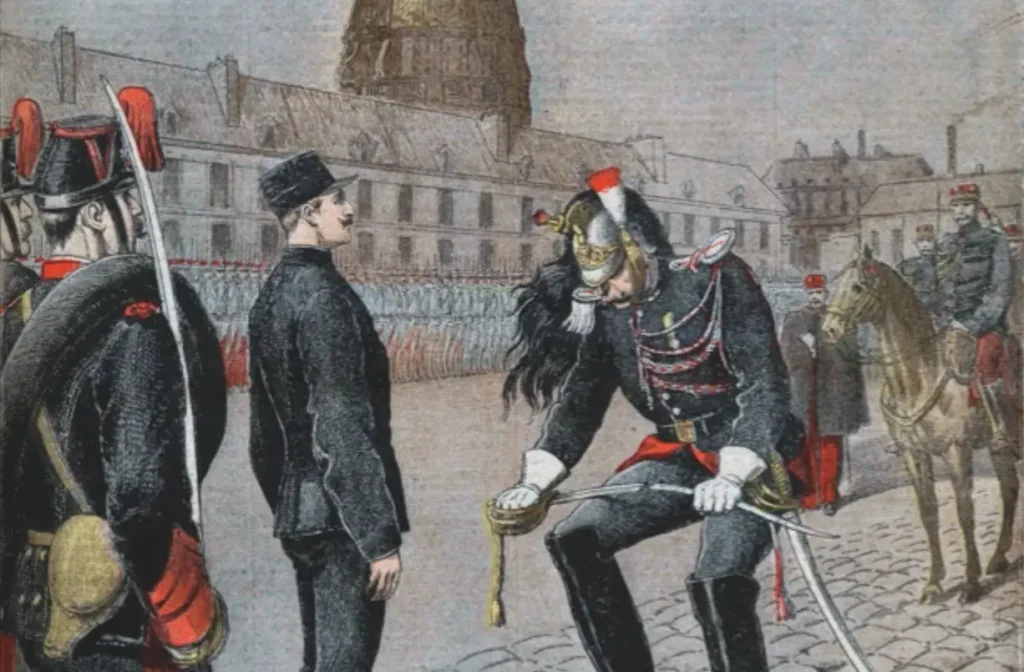
This week, France’s National Assembly voted unanimously to posthumously promote Captain Alfred Dreyfus, the Jewish officer falsely convicted of treason in 1894, to the rank of brigadier general. Framed as an act of reparation, the move is being hailed as a moral stand against antisemitism and a symbol of France’s commitment to historical justice.
But the timing and context raise troubling questions. While honoring a Jewish victim of the past, France continues to undermine the Jewish state of the present. The same government that calls Dreyfus’s persecution a stain on the Republic now threatens sanctions against Israel and flirts with unilateral recognition of a Palestinian state—even as Hamas holds hostages and continues its genocidal war against the Jewish people.
This is not moral clarity. It’s moral theater.
Dreyfus was the scapegoat of a French military apparatus steeped in antisemitism. Today, Israel is the scapegoat of a global diplomatic apparatus infected with a newer, more socially acceptable antisemitism—one that masquerades as “human rights advocacy” while denying Jews the right to defend themselves.
President Emmanuel Macron recently declared that recognizing a Palestinian state is a “moral duty.” Yet he has not conditioned that recognition on the Palestinian Authority ending incitement, nor on Hamas releasing Israeli hostages, renouncing terror, or accepting the right of Israel to exist. France speaks the language of peace while rewarding the very forces that perpetuate war.
Worse, France’s approach lends credibility to baseless claims of genocide against Israel, echoing the blood libels that once fueled European antisemitism. If Macron truly seeks peace and justice, he should begin by recognizing Hamas for what it is: a genocidal terrorist organization that uses Palestinian civilians as human shields and Israeli civilians as targets.
To honor Dreyfus today is easy. He is safely in the past. He poses no political risk. The challenge is to defend Jews when it does cost something—when it requires confronting fashionable moral narratives that invert aggressor and victim, terrorist and soldier, hostage-taker and hostage.
Modern France must decide: Will it be the republic of Émile Zola or of Édouard Drumont? Will it stand against antisemitism in all its forms—including its anti-Zionist disguise—or will it seek absolution by honoring Jewish corpses while isolating Jewish sovereignty?
Symbolic justice cannot mask diplomatic betrayal. If France wants to atone for Dreyfus, it must begin by standing with Israel today—not just with words, but with policy.